LA's Urban Future
An updated look at LA's transit expansion with Benjamin Schneider.


As we kick off our new issue on “place” — looking at where and how we live — we thought we would start with a look at what is going on in our home city, Los Angeles. We spoke with Benjamin Schneider, a freelance journalist covering all things urbanism, who wrote a piece in 2024 stating that, “more than any other American city, LA is trying to address its problems by transforming its built environment.” We revisited some of the policy changes he was most excited about, where these changes stand now, and what is to come. Schneider’s work has appeared in Bloomberg CityLab, MIT Technology Review, Slate, The Nation, the Los Angeles Times, and others. He runs a Substack called The Urban Condition.
This interview was conducted by Tatti Ribeiro for franknews, and condensed for clarity. Help support franknews by subscribing below.
I wanted to talk to you about a piece you published about a year ago: Los Angeles is Laying the Groundwork for a Better Urban Future. What stood out was this is a pretty optimistic look at Los Angeles, and its future. What encouraged you and do you still feel like optimistic?
For the last few years, I’ve been impressed by LA’s bold policy swings and bold urban planning swings. The particular things I highlighted in that article are the transit expansion that LA is currently in the midst of, which was a product of ballot measures that authorized sales tax funding and other revenue sources for transit. Then there was Measure HLA – the Safe Streets measure – a very bold initiative to require the city to do bike and pedestrian and transit treatments on a street whenever it’s getting repaved. Then there was Measure ULA, the so-called mansion tax, that was slated to generate a lot of money for affordable housing. And then there’s ED1, Mayor Bass’s affordable housing streamlining bill that has generated a lot of applications.
It’s helpful to look at each of these initiatives individually and evaluate how effective they’ve been. When I was writing that article, I was struck by their ambition and scope. And while many of them have led to positive change, I’ve become somewhat disillusioned by how some have turned out. Several were watered down or didn’t work as well as originally envisioned.
What do you feel is the most disappointing? Is the problem ever the city itself?
Let’s start with Measure HLA which passed in 2024. It was a powerfully designed and powerfully written policy. It basically required the city to make safe streets changes on a schedule. But, the city has tried to find ways to skirt the terms of the law and either not implement the safe street treatments, or to do them in a smaller, watered-down scale.
It’s still early days, but I understand that the city’s Department of Transportation has never been really enthusiastic about it, and same with other elected officials which seems to have been a roadblock to actually seeing those transformative street redesigns that the voters were promised.
Measure ULA is another interesting case. It was marketed as a mansion tax, but its results have been quite mixed. In reality, it goes well beyond a mansion tax – it applies to all real estate transactions over $5 million, with a higher rate for those above $10 million. Developers and housing advocates have expressed concern that including apartment buildings under this tax has discouraged housing development. A report from the Lewis Center found evidence of that effect, though other scholars have debated the study’s methodology.
But it logically follows that if you’re going to tax apartment building sales, a developer would likely be more cautious about building an apartment, since the tax would make it harder to sell at the desired price if that’s part of their business plan. Beyond that, the tax has generated far less revenue than projected, partly because people have been avoiding those types of real estate transactions since the tax was enacted.
Do you know how much did they end up bringing in?
As of now, the tax has brought in close to a billion dollars in revenue. Those figures have been rising steadily every month for the past two and a half years, yet the total remains well below the initial projection of about a billion dollars per year. It’s possible the market is adjusting and real estate players are starting to accept the tax as a reality, resuming transactions they had previously delayed. Still, for a long time, sales were significantly lower than expected.
Who has that billion dollars, and how is it being used?
This is the positive side of that policy. Only recently has that money started to reach the community, after being held back due to potential lawsuits that have now largely been resolved. With those issues settled, the city has become more comfortable spending the funds. A couple of months ago, the city authorized very high levels of affordable housing funding for the new fiscal year – around $370 million – most of it coming from Measure ULA revenues. That represents a major positive impact of the law: a substantial infusion of money for affordable housing. Some of the funds have also gone toward rental assistance and tenant eviction defense programs.
So, the money is getting used, though more slowly than many would like. The effects on affordable housing development aren’t yet very visible, but we may soon see an uptick in new projects supported by those funds.
One additional point is that Mayor Bass and other LA policymakers have been working on state legislation to lower the tax rates for apartment buildings and commercial properties under this law, aligning it more closely with its original intent as a mansion tax. That proposal did not pass during the last legislative session in the fall, but they plan to try again in the winter. If enacted, it could address many of the concerns about the law’s impact on apartment development.
Is the city building the units itself? Does it get bid out? How does that work in Los Angeles exactly?
I think they have a pool of money that they distribute to affordable housing developers, combined with state funding the city receives for that purpose. So the city itself isn’t building the housing; it’s contracting the work out.
Were there any other ones you wanted to touch on before we moved on?
I’d definitely highlight ED1, which is a really exciting policy that has sparked a major surge in affordable housing development proposals – and, to some extent, in actual construction. It’s still too early to tell how many of those proposed projects have broken ground or opened, but the policy has clearly generated strong interest among developers in building low-income, deed-restricted affordable housing, which is a very promising development.
The challenge is that the policy was watered down and no longer applies in single-family zoned areas and some other locations. There have also been concerns about developers demolishing rent-stabilized units to build new affordable ones. That’s a difficult issue for housing policymakers, who have to balance competing needs. Once again, it’s a great idea with significant potential, but it risks becoming a shadow of its original vision.
Would you credit that policy to Karen Bass? Do you feel like she’s doing a successful job right now? Or do you think that some of the downfalls or the unintended consequences or the general lackluster effect of some of these proposed ideas are a failure of hers?
The ED1 policy is her initiative, and she deserves credit for originating it and bringing it forward. Where she hasn’t been as bold as she could have been is in not defending its initial, much more ambitious form, and being willing to see it watered down.
That tendency also shows her, and many other LA policymakers’, strong opposition to SB 79 – the major transit upzoning bill passed recently in California. There’s been reporting that LA leaders are now trying to delay the implementation of that bill. For those focused on housing production, that’s a frustrating move by Karen Bass and her allies. She seems especially cautious about disrupting the low-density character of many neighborhoods, which has held back the impact her housing policies might otherwise have had.
Interesting.
With housing, all these things I’m talking about are difficult to evaluate because they do take a long time to take effect and to show their impacts. It usually takes a couple of years to build an apartment building. We’ll see if in two to three years, maybe, ED1 and Measure ULA will show up in an even bigger way in terms of the actual built environment of new buildings actually getting built.
When you think of a city becoming the most successful version of itself, obviously these are very large things. When you think about transit, housing, they’re the bedrock, I guess. Do you think beyond those things?
One thing I’ve argued with ED1 is that it’s a really interesting model that other cities should look into – basically, exempting affordable housing developments from as much of zoning and building codes as possible, so long as you’re building safe and reasonable buildings, and then seeing what happens. LA effectively ran this natural experiment and instantly created a ton of interest among builders in developing affordable housing. That’s one example where I think LA is pursuing a policy that could work elsewhere, and it would be interesting to see more cities really go for it.
In terms of implementing design and function – are they very city-specific? I mean in terms of thinking about the culture of the city, the industries, and the workflow of the city. Do you feel like Los Angeles is thinking of its broader self?
I’m generally wary of city exceptionalism – the idea that something works somewhere, but because we’re not that city, we can’t adopt it. That often feels like code for defeatism and NIMBYism – a way of saying we can’t do things differently than we currently do.
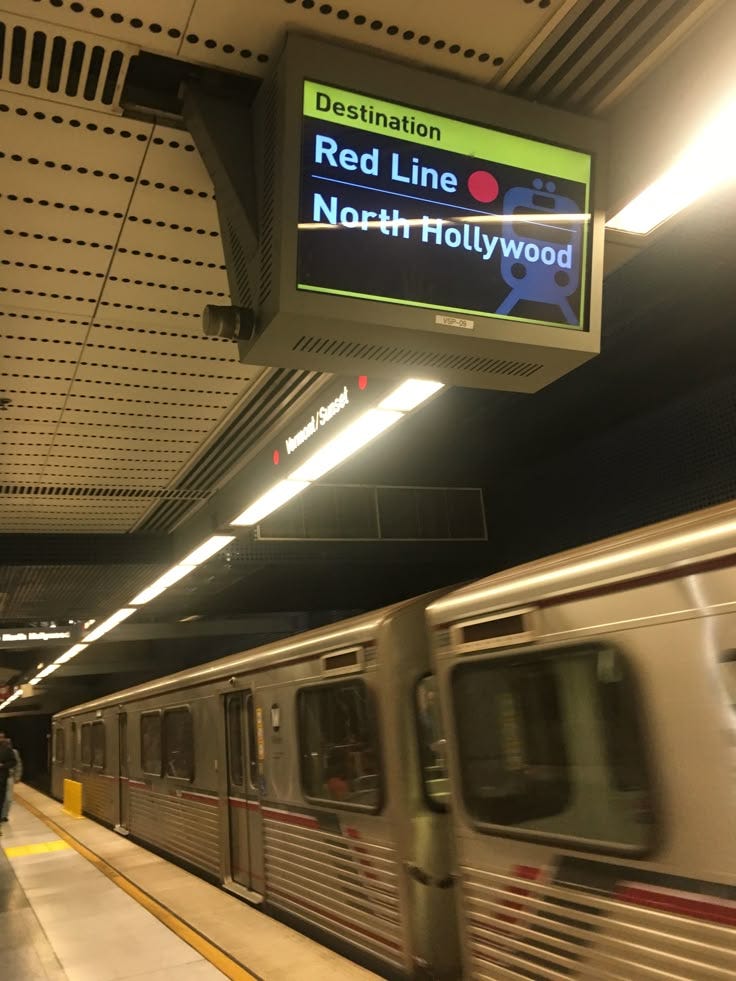
As to the carless Olympics, I know that’s a big question mark about how successfully the city will achieve that. But going back to the original premise of our conversation, the transit piece is the one that I think I’m still the most optimistic about. Again, it’s a very long timeline. But the D Line, Purple Line subway along Wilshire out to UCLA and Westwood—I think it’s going to be the most transformative transit project in LA’s history and the most important transit project in America in recent memory. It’s so long needed, connects such dense neighborhoods, so much travel demand along that corridor, and it’s a real high-capacity subway, not light rail that stops in traffic. That, I think, is going to be really exciting when it opens and will transform a lot of people’s lives who live along that line.
Is that meant to open in segments?
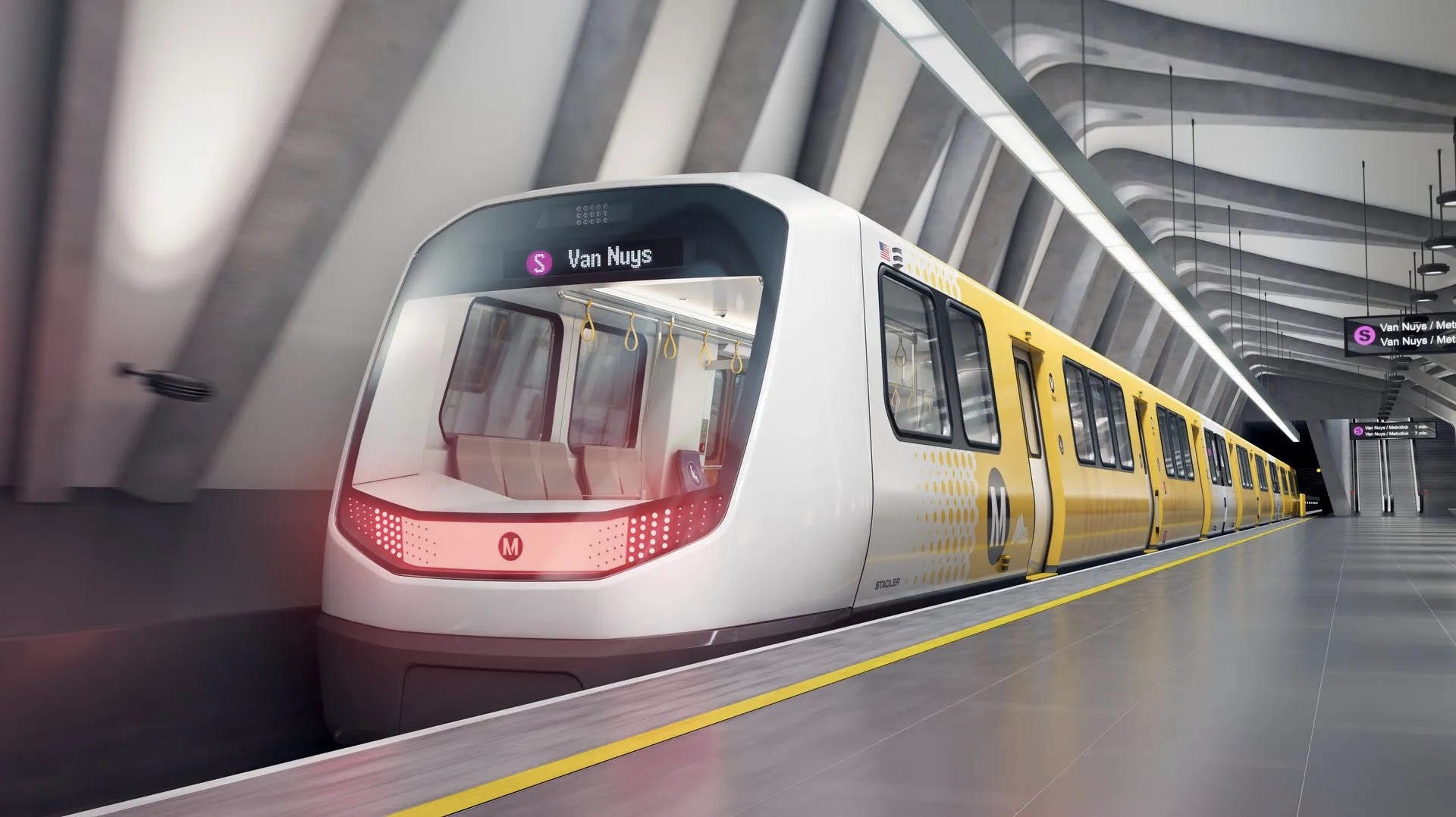
The part out to La Brea is supposed to open early next year, sometime between January and March. Then the next two segments, all the way out to Westwood and UCLA, are supposed to open by 2028. The LAX people mover is also supposed to open next year, potentially by June. I think that’s also going to be a really big help for getting to and from LAX and will help make that experience much better than it is now.
I constantly refer to LAX as the worst airport in America. SFO, I think, is the best airport in America. I would eat sushi off the floor of SFO, and I don’t want to order a coffee at LAX. I’m on a bus on the tarmac. It’s so crazy. What do you think about Brightline?
It’s from Vegas to Southern California, but not directly to Los Angeles. That’s another project that I cited in my piece on LA’s bold urban future, and I continue to think that’s a super exciting project. It’s not going to be open for the Olympics. The company is now admitting that. They say 2029. I think that’s also pretty unrealistic. They’ve recently announced big cost increases, too, going from $12 billion to $21 billion. But there’s real construction happening along parts of the route.
The Las Vegas station, for instance, has real construction. It’s not a total fantasy, there are definitely signs that it could happen. If it would be a hugely exciting development for Southern California and for Las Vegas to have that connection. I think it’ll be very competitive as a mode of transportation.
What I hope for, and I’ve been covering advocates that are working on this, is that it will spark more ambition and more work on the Metrolink system, getting that to be a fast regional rail service in the LA area.
Do you think we’ll ever get one from LA to San Francisco?
Actually, I think it will happen. It’s a decades-long project, so we’ll see when. But I think hopefully people in their 20s, 30s, 40s will see it happen in their life.
Wow. I hope so. Do you know who the people behind Brightline West are?
Brightline West is a pretty complicated financial arrangement that I don’t fully understand, but I know the central person behind Brightline West and Brightline Florida, which is its sister railroad, is Wes Edens, who is a billionaire businessman. He also owns the Milwaukee Bucks NBA team, and he’s been a very visible figurehead of the Brightline concept. He’s talked a lot about how he’s hoping to usher in a new era of rail in the US. It’s touch-and-go, but it seems like things are still happening there.
Interesting. What an interesting person who I’m now just learning about.
I don’t know too much about him other than he owns a couple of sports teams.
I think the sports and tourism piece is obviously huge for Brightline Florida. I think that’s a big part of their market—getting people to games, getting people to vacation. It’s a different kind of service than a lot of railroads that are more for commuters or for other kinds of travel patterns. The Brightline station in Vegas is going to be right next to the Vegas Raiders stadium, so that will probably be a big draw.
I’m glad to hear you feel optimistic about it, despite it taking a little bit longer.
Cautiously, with all things high-speed rail, it’s a believe-it-when-you-see-it situation, but at this point, it’s still happening.
When you’re thinking of a high-speed rail, it is not a bottom-up approach. That’s not the neighborhood doing that – that is a weird billionaire being like, okay, I can finance this massive thing.
Last question, are cities successful because of how people participate, or because the politicians have good policies?
It’s a really good question. I think political leadership is really important, and I think to be an engaged citizen, you have to have some faith that your vote counts and that political leaders can make a difference for good or for ill. I think that’s very true at the city level. At the state level, in California, for instance, there’s been a lot of movement on housing, with policymakers making big changes to make it easier to build housing in a huge number of contexts. That’s also something that’s still yet to bear fruit in a big way, but I think already you can see, with the ADU boom in LA, that is a direct result of elected officials making decisions and basically broadly legalizing ADUs everywhere in California.
 | A guest post by
|